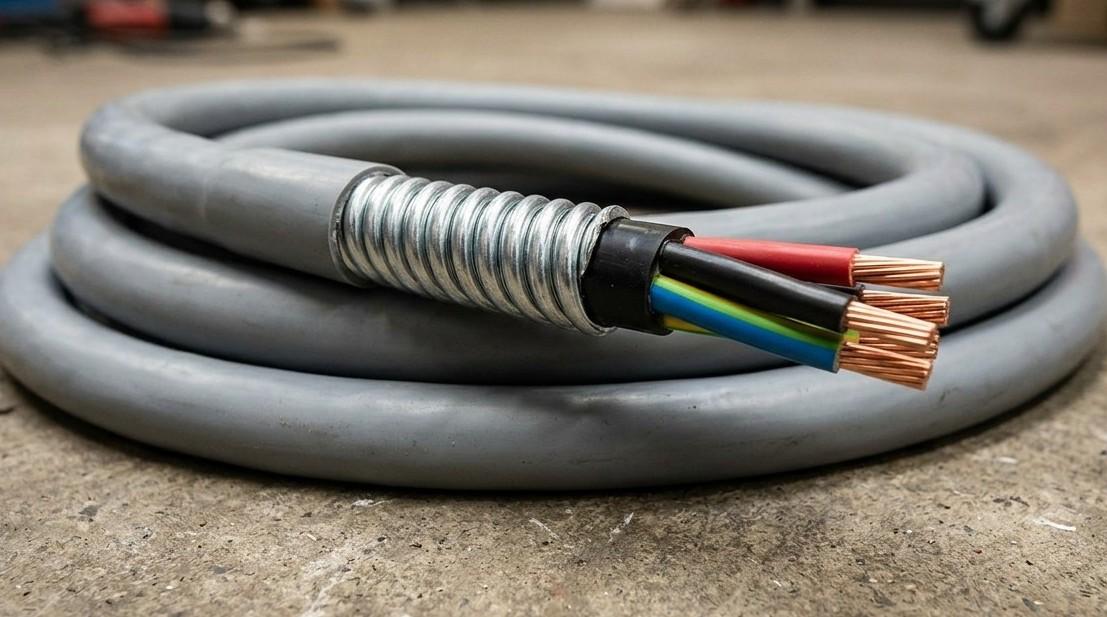
Armoured cable is an electrical cable built with a protective metal layer wrapped around its inner conductors. That metal layer, made from either steel wire or aluminium wire, sits between the inner insulation and the outer sheath. Its job is to shield the cable from physical damage, crushing, moisture, and external pressure that would destroy an ordinary cable in a short period of time.
This type of cable is used wherever a standard unarmoured cable would be too vulnerable. Think underground routes, outdoor power feeds, industrial floors, or anywhere that machinery, vehicles, or environmental stress could cut through or crush an unprotected cable running through the area.
How Armoured Cable Is Built?
Understanding the structure helps you choose and install the right product. From the centre outward, an armoured cable consists of a conductor at the core that carries the electrical current. Copper is the preferred material because it conducts electricity more efficiently, though aluminium conductors are also used where weight and cost are a priority for the project.
Insulation wraps directly around the conductor and two materials are common here. PVC insulation is rated to 70 degrees Celsius and costs less, while XLPE insulation handles up to 90 degrees Celsius, carries higher current ratings, and lasts longer in service over time.
The inner bedding, usually PVC, holds the cores together and cushions them before the armour layer is applied. The outer sheath, again typically PVC, covers everything and protects against UV radiation, moisture, and abrasion from the surrounding environment.
The Three Main Types of Armoured Cable
| Type | Armour Material | Best For |
| SWA (Steel Wire Armoured) | Round steel wires | Underground, outdoor, multicore power cables |
| STA (Steel Tape Armoured) | Flat steel tape | Indoor ducts, cable trays, crush protection |
| AWA (Aluminium Wire Armoured) | Aluminium wires | Single core cables, lightweight installations |
SWA Cable
Steel Wire Armoured (SWA) cable is the most commonly used armoured cable for power distribution and construction projects. Its steel wire armour provides excellent mechanical protection, making it ideal for underground installations, outdoor power supplies, and fixed industrial applications. Due to its strength and rigidity, SWA is best suited to permanent installations.
STA Cable
Steel Tape Armoured (STA) cable uses steel tape instead of wire armour, offering strong crush resistance while remaining more flexible than SWA. It is commonly used in cable trays, ducts, and indoor installations where heavy pulling forces are not a concern.
AWA Cable
Aluminium Wire Armoured (AWA) cable is used for single-core cables because aluminium is non-magnetic and does not overheat when exposed to the cable’s magnetic field. It also weighs less than steel armour, making it a practical choice for longer cable runs where reducing weight is important.
Where Armoured Cable Is Used?
Armoured cable is not a niche product reserved for specialist applications. It is the standard choice across a wide range of real world situations where cable protection, reliability, and long service life are all required at the same time.
- Underground power distribution where cables must survive soil pressure, moisture, and accidental digging activity over many years
- Outdoor installations including garden lighting, outbuilding power supplies, and cables fixed to external walls
- Industrial environments such as factories, warehouses, and construction sites where mechanical damage is a daily operational risk
- Power networks, cable distribution systems, and substations handling medium and high voltage loads
- Data centres and commercial buildings where cable integrity is absolutely critical to business continuity
- Public infrastructure including schools, hospitals, and transport hubs requiring fire safe and durable cabling solutions
Armoured Cable Sizes and How to Choose
Cable size is measured by the conductor’s cross-sectional area in square millimetres (mm²). Smaller sizes such as 1.5 mm² and 2.5 mm² are commonly used for lighting and light power circuits, while 4 mm² to 6 mm² cables are suitable for larger installations and outdoor power supplies.
For higher power demands, 10 mm² to 16 mm² cables are often used for commercial and industrial applications, while 25 mm² and above are typically used for main power distribution. The right cable size depends on factors such as electrical load, cable length, and installation conditions. A trusted armoured cable supplier can help you select the most suitable option for your project.
Key Benefits of Armoured Cable
- High mechanical protection against impact, crushing, and abrasion throughout the cable life
- Suitable for direct burial without additional conduit in most standard installation conditions
- Long service life that regularly exceeds 30 years when installed and maintained correctly
- Resistant to moisture, UV radiation, and many chemicals depending on the outer sheath specification chosen
- Available in LSZH versions for installations in enclosed spaces requiring low smoke and zero halogen output during a fire
- Provides a reliable and continuous earth path through the armour layer for added electrical safety
Conclusion
Armoured cable is a straightforward solution to a real engineering problem. When cables are exposed to physical risk, underground conditions, outdoor weather, or industrial environments, the metal armour layer is what keeps the system running safely over the long term.
Choosing the right type, whether SWA for underground multicore work, AWA for single core feeds, or STA for indoor duct installations, comes down to the specific demands of your project and the environment it will operate in.
Ready to Source Quality Armoured Cable for Your Project?
Whether you need SWA, AWA, or STA cable in UAE, Aswan Electric keeps a full range of certified armoured cable supplier Dubai UAE stock ready for your requirements.
Contact our team today and we will help you select the right cable for the right application, first time.
Related Articles
- Looking to understand electrical basics? Explore The Ultimate Introductory Guide to Electrical Wires & Cables: a beginner-friendly overview of wires and cables.
- Curious about supplier benefits? Read Why Smart Businesses Work with Schneider Electric Suppliers for insights on reliability and performance.
- Comparing brands? Check Schneider vs ABB: Best Electrical Brand Comparison for a quick evaluation of both leaders.
- Not sure about protection devices? Learn How to Choose the Right Miniature Circuit Breaker? for safe and correct selection.
- Planning to source Schneider products? Read How to Choose the Right Schneider Electric Supplier in Dubai to understand key factors for selecting a reliable supplier.