Electrical safety is a critical requirement for modern construction projects across the UAE. Whether for residential, commercial, or industrial developments, selecting the right Miniature Circuit Breaker (MCB) is essential for reliable power distribution, equipment protection, and compliance with electrical standards.
Schneider Electric is a trusted manufacturer of high-quality MCBs widely used in UAE projects. However, selecting the right Schneider MCB requires evaluating factors such as load requirements, fault levels, breaking capacity, trip curves, and pole configuration to ensure optimal system protection.
Understanding the Role of an MCB
A Miniature Circuit Breaker (MCB) is a protective device that automatically disconnects a circuit during overloads or short circuits. Unlike traditional fuses, it can be reset after a fault, helping protect cables, equipment, and electrical systems while reducing maintenance downtime.
In UAE projects, MCBs are commonly installed in:
- Residential distribution boards
- Commercial lighting circuits
- HVAC systems
- Motor control panels
- Retail facilities
- Industrial distribution systems
- Data centers and critical infrastructure
For reliable protection solutions, working with a trusted MCB supplier Dubai UAE helps ensure access to genuine products suitable for different electrical applications. Proper selection ensures reliable operation while minimizing nuisance tripping and maintaining system safety.
Why Are Schneider MCBs Popular in UAE Projects?
Schneider MCBs are widely used in UAE residential, commercial, and industrial projects due to their reliability, safety, and compliance with international electrical standards. They are available in various current ratings, breaking capacities, and tripping curves to suit different applications.
Key advantages include:
- High operational reliability
- Thermal-magnetic protection
- Multiple pole configurations
- Wide range of current ratings
- Strong short-circuit interruption capability
- Compatibility with modern distribution boards
- Compliance with international electrical standards
These features make Schneider MCBs suitable for a wide variety of UAE electrical installations.
How to Select the Right Schneider MCB for UAE Projects
Selecting the right Schneider MCB requires evaluating load requirements, fault levels, trip characteristics, and compliance standards to ensure safe and reliable protection.
Step 1: Determine the Circuit Load
The first step in selecting a Schneider MCB is calculating the circuit’s full-load current. The breaker rating should adequately support normal operating conditions while providing protection against overloads.
Typical applications include:
| Application | Typical MCB Rating |
| Lighting circuits | 6A – 10A |
| Socket outlets | 16A – 20A |
| Water heaters | 20A – 25A |
| Air conditioning units | 25A – 40A |
| Distribution feeders | 40A – 63A |
Engineers should always verify cable capacity, diversity factors, and anticipated load growth before finalizing breaker ratings. Oversizing an MCB may reduce protection effectiveness, while undersizing may lead to unnecessary tripping.
Step 2: Select the Correct Breaking Capacity
Breaking capacity, often expressed as Icn or Icu, refers to the maximum fault current that the MCB can safely interrupt without damage. This is one of the most important selection criteria for UAE projects.
General UAE Recommendations
- 6 kA MCBs: Suitable for low fault-level applications, commonly used in residential villas, apartments, small retail units, and standard commercial spaces.
- 10 kA MCBs: Designed for higher fault protection requirements, commonly used in commercial buildings, office towers, hotels, and educational facilities.
- 15 kA and Above MCBs: Recommended for high fault-level environments, commonly used in industrial facilities, manufacturing plants, data centers, and critical infrastructure projects.
Schneider Electric’s Acti9 MCBs are available in multiple breaking capacities, including 6 kA, 10 kA, and 15 kA options, with higher-capacity solutions available for specialized industrial applications.
Fault current levels increase when panels are installed closer to transformers and substations. Therefore, proper fault calculations should always be carried out during system design.
Step 3: Choose the Appropriate Trip Curve
The trip curve determines how quickly an MCB responds to overcurrent conditions.
- Type B Curve: Designed for circuits with low inrush currents, commonly used for residential lighting, heating systems, and general-purpose electrical loads.
- Type C Curve: Suitable for circuits with moderate starting currents, widely used for air conditioning systems, small motors, office equipment, and commercial lighting.
- Type D Curve: Designed for high inrush current applications, commonly used for large motors, compressors, industrial machinery, and heavy-duty equipment.
Selecting the wrong trip curve can lead to nuisance tripping or inadequate protection. For most UAE commercial projects, Type C remains the preferred choice.
Step 4: Verify Compliance with Applicable Standards
Electrical consultants in the UAE generally require compliance with IEC standards. Two major standards apply to Schneider MCBs:
IEC 60898-1
This standard applies primarily to residential and similar installations. It covers low-voltage protective devices commonly used in homes and commercial buildings.
IEC 60947-2
This standard applies to industrial environments where higher fault levels and more demanding operational requirements exist.
Step 5: Select the Correct Pole Configuration
The pole configuration depends on the type of circuit being protected.
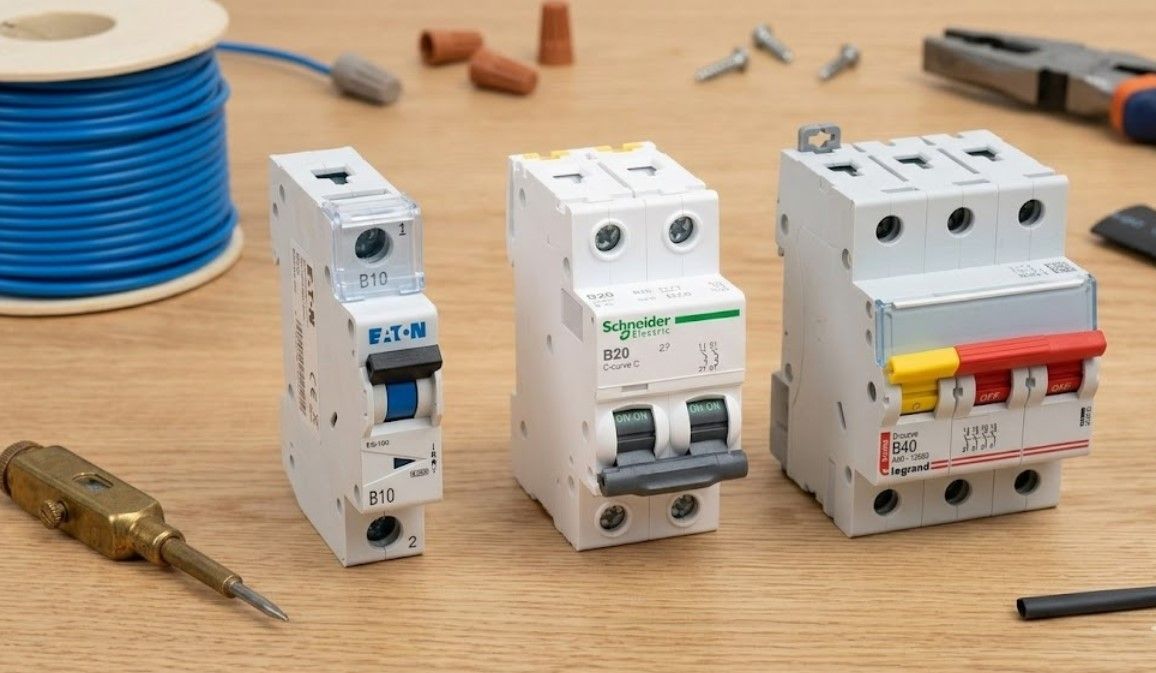
- Single Pole (1P): Designed for single-phase branch circuits, commonly used for lighting circuits, socket outlets, and residential applications.
- Double Pole (2P): Provides complete phase and neutral isolation, commonly used for water heaters, single-phase equipment, and isolation requirements.
- Three Pole (3P): Suitable for three-phase power systems, commonly used for motors, industrial loads, and commercial equipment.
- Four Pole (4P): Provides protection for three-phase systems with neutral, commonly used in main distribution boards, critical commercial installations, and advanced electrical networks.
Choosing the correct pole configuration improves safety, isolation, and maintenance flexibility.
Common MCB Selection Mistakes
Many electrical issues originate from incorrect breaker selection rather than product failure.
Common mistakes include:
- Choosing breaker ratings based solely on load size
- Ignoring prospective fault current levels
- Selecting incorrect trip curves
- Oversizing breakers to prevent nuisance tripping
- Failing to coordinate protection devices
- Neglecting future load expansion requirements
To avoid incorrect product selection and ensure reliable electrical protection, partnering with an authorized Schneider Electric dealer UAE helps businesses source genuine products with professional guidance and dependable support.
Conclusion
Selecting the right Schneider MCB for UAE projects requires careful consideration of load requirements, breaking capacity, trip curves, pole configuration, and applicable electrical standards. Proper MCB selection ensures enhanced safety, reliable performance, and long-term protection for residential, commercial, and industrial electrical systems.
With the increasing demand for efficient power distribution solutions in the UAE, choosing genuine Schneider products from a trusted supplier helps ensure quality, compliance, and reliability. For expert guidance and reliable Schneider Electric solutions, Aswan Electric delivers high-quality electrical products and professional support to meet diverse project requirements.
For genuine Schneider Electric MCB suppliers and expert electrical protection solutions tailored to your UAE project requirements, visit our contact us page.
Related Articles
- Looking to understand electrical basics? Explore The Ultimate Introductory Guide to Electrical Wires & Cables: a beginner-friendly overview of wires and cables.
- Curious about supplier benefits? Read Why Smart Businesses Work with Schneider Electric Suppliers for insights on reliability and performance.
- Comparing brands? Check Schneider vs ABB: Best Electrical Brand Comparison for a quick evaluation of both leaders.
- Not sure about protection devices? Learn How to Choose the Right Miniature Circuit Breaker? for safe and correct selection.
- Planning to source Schneider products? Read How to Choose the Right Schneider Electric Supplier in Dubai to understand key factors for selecting a reliable supplier.