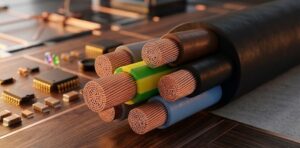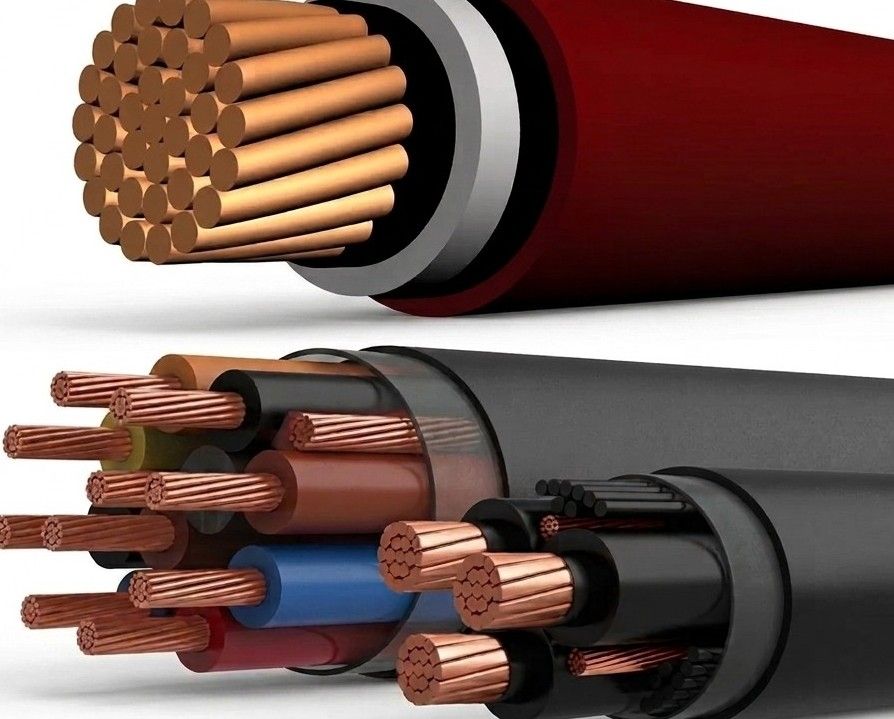
Choosing the right cable is an important part of any electrical project. Whether you are working on an industrial system, a commercial setup, or a technical installation, the cable you choose can affect performance, safety, and long-term reliability.
Two of the most commonly used options are power cables and control cables. While they may seem similar at first, they are designed for very different purposes.
Many people ask which one is better, but the more useful question is which one is better for your specific application. Each cable has its own role, and understanding that difference can help you make a smarter decision.
What is a Power Cable?
A power cable is used to transmit electrical power from one point to another. Its main purpose is to carry electricity safely and efficiently to equipment, machinery, buildings, or systems that need a stable energy supply.
These cables are designed to handle higher voltage and current levels. Because of that, they usually have thicker conductors and stronger insulation. Their build quality allows them to perform well in demanding conditions where electrical safety and load capacity matter most.
Power cables are widely used in power distribution systems, heavy machinery, industrial plants, commercial buildings, and infrastructure projects. In simple terms, whenever the job involves delivering electrical energy, a power cable is usually the right choice.
What is a Control Cable?
A control cable is used to transmit signals that manage or regulate electrical equipment. Instead of carrying large amounts of power, it carries commands and communication signals that tell a system how to operate.
For example, a control cable may help start or stop a machine, regulate speed, or connect different components in an automated system. This makes it essential in control panels, production lines, automation systems, and machinery where accurate signal transmission is important.
Control cables are usually lighter and more flexible than power cables. They may also include shielding to reduce electrical interference and help maintain signal quality in complex environments.
Power Cable vs Control Cable: Key Differences
| Feature | Power Cable | Control Cable |
| Primary Purpose | Transmits electrical power | Transmits control signals |
| Voltage Level | High voltage and current | Low voltage signals |
| Main Function | Supplies electricity to equipment | Controls and monitors operations |
| Construction | Thicker conductors with strong insulation | Multiple cores with flexible design |
| Protection Focus | Heat resistance and load handling | Signal stability and interference protection |
| Flexibility | Usually less flexible | Usually more flexible |
| Common Applications | Power distribution, motors, heavy equipment | Automation, control panels, machinery systems |
| Best Suited For | Energy transmission | Signal communication and system control |
Where Power Cables Are Used
Power cables are the better option when the main requirement is electrical transmission. If a machine, motor, or system needs electricity to function, a power cable is used to deliver that energy.
These cables are common in factories, commercial buildings, energy systems, and large-scale installations. They are also used in outdoor and underground projects where durability and strong insulation are important.
Because they are built for heavier loads, power cables are essential in situations where safety and uninterrupted electrical flow matter.
Where Control Cables Are Used
Control cables are used in systems where coordination and communication are needed. They play an important role in modern automation because they help equipment respond correctly to instructions.
You will often find control cables in manufacturing plants, elevators, conveyor systems, HVAC units, and electrical control panels. In these environments, the goal is not just to power equipment but to make sure it behaves as expected.
This is where control cables become valuable. They help systems run smoothly by transmitting signals accurately and consistently.
Why Both Cables Matter
In many real-world systems, power cables and control cables are not competing options. They work together. One cable supplies the electricity, while the other helps manage how that electricity is used.
For example, in an industrial production line, power cables may run the machines while control cables help regulate timing, movement, and performance. Without one, the other cannot deliver complete system efficiency.
That is why the choice should always be based on function, not just comparison.
Things to Consider Before Choosing
Before selecting between a power cable and a control cable, it is important to understand what your system actually needs. The first thing to consider is purpose. If the cable is meant to deliver energy, then a power cable is required. If the cable is meant to send signals or commands, then a control cable is the better fit.
The second factor is environment. If the installation is exposed to moisture, heat, heavy load, or outdoor conditions, cable quality and insulation become even more important. If the area has electrical noise or interference, control cable shielding may be necessary.
You should also think about flexibility, installation space, and future maintenance. A cable that fits the current need but causes problems later is never the best choice.
Common Mistakes to Avoid
One common mistake is assuming that one cable can replace the other. A control cable cannot safely handle the power load of a system designed for a power cable. In the same way, a power cable cannot properly do the job of transmitting sensitive control signals.
Another mistake is choosing based only on price. While budget matters, poor cable selection can lead to higher costs later through maintenance, downtime, or replacement. Ignoring the installation environment is also a problem. Even the right cable type can underperform if it is not suitable for the surrounding conditions.
Which One Is Better?
The answer depends entirely on the job. If your system needs a cable to transmit electricity, then a power cable is better. If your system needs a cable to send signals and manage operations, then a control cable is better.
So rather than asking which one is better in general, it is more useful to ask which one is better for your application. Once you understand the role of each cable, the decision becomes much easier.
Final Thoughts
Power cables and control cables may look similar, but they are designed for different tasks. One is built to carry electrical energy, while the other is designed to send control signals that help systems operate properly.
Choosing the right cable is important for performance, safety, and long-term reliability. When you understand the difference between the two, you can avoid unnecessary issues and make better decisions for your project.
For any cable-related queries, you can contact Aswan Electric, a trusted supplier across the UAE, providing solutions tailored to your requirements. Your inquiries are always welcome.
Best Selling Power and Control Cables
- Control Multi Core Armoured Cable CU XLPE SWA PVC Black Numbered Cores BS 5467: Reliable control cable designed for accurate signal transmission in demanding environments.
- Power Control Multi Core Armoured Cable CU XLPE SWA PVC 600 1000V: Dual-purpose cable suitable for both power supply and control applications.
- Power Control Multi Core Screened Cable CU XLPE CUT PVC 600 1000V: Screened cable offering enhanced protection against electrical interference.
- Power Control Single Multi Core Unarmoured Cable CU XLPE PVC 600 1000V: Flexible unarmoured cable ideal for internal installations and lighter applications.
- Power Multi Core Armoured Cable CU XLPE SWA PVC Circular Conductors BS 5467: Heavy-duty armoured cable built for safe power transmission in tough conditions.