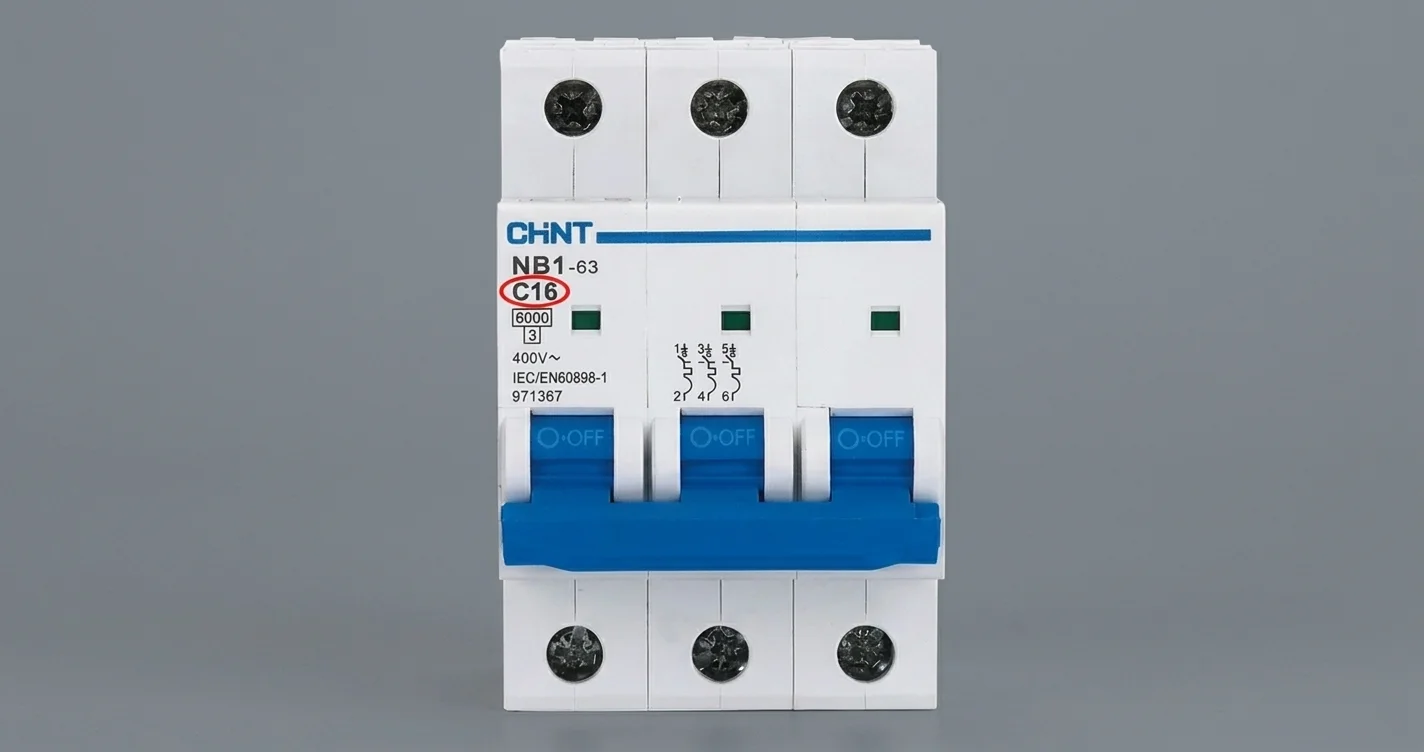
The types of MCB are mainly identified by their tripping characteristics and suitability for different electrical loads. Type B is commonly used for lighting and residential circuits, while Type C is suitable for equipment with moderate starting currents. Type D is designed for high-inrush loads such as motors and transformers. Choosing the right MCB also requires checking the rated current, number of poles, breaking capacity, voltage and application requirements.
Miniature Circuit Breakers (MCBs) are essential components of electrical distribution systems. They protect electrical circuits from overloads and short circuits by automatically disconnecting the power supply when a fault occurs.
However, not every MCB is suitable for every electrical application. Different equipment draws different levels of current during normal operation and startup. Choosing an unsuitable breaker can lead to unnecessary tripping or inadequate circuit protection.Understanding the different types of MCB helps electricians, contractors and facility managers select suitable protection for residential, commercial and industrial installations.
What Is an MCB and How Does It Work?
An MCB is an automatic electrical protection device designed to interrupt the flow of current when it exceeds a safe level. It protects electrical wiring and connected equipment against overloads and short circuits.
Most MCBs use two operating mechanisms:
- Thermal protection: A bimetallic strip responds to sustained overcurrent. As it heats and bends, it activates the tripping mechanism.
- Magnetic protection: An electromagnetic mechanism responds rapidly to high fault currents, helping disconnect the circuit during a short circuit.
When either mechanism detects a fault, the MCB opens its contacts and interrupts the electrical supply.
Unlike a traditional fuse, an MCB can generally be reset after the fault has been identified and corrected. However, repeatedly resetting a breaker without investigating the cause of tripping can create safety risks.
What Are the Different Types of MCB?
MCBs are commonly classified by their tripping characteristics. The trip curve indicates how much current above the rated value is required to trigger the magnetic protection mechanism.
The main types include Type B, Type C and Type D. Type K and Type Z are also available for specific applications.
Type B MCB
A Type B MCB typically trips magnetically at approximately 3 to 5 times its rated current. It is designed for circuits with relatively low starting currents.
Common applications include:
- Residential lighting circuits
- General-purpose socket circuits
- Resistive heating equipment
- Domestic electrical installations
For example, a Type B breaker may be suitable for a lighting circuit where connected equipment does not produce a significant starting-current surge.
Type C MCB
A Type C MCB typically trips magnetically at approximately 5 to 10 times its rated current. It is commonly selected for circuits where equipment draws a moderate inrush current when switched on.
Typical applications include:
- Small motors
- Air-conditioning equipment
- Fluorescent lighting installations
- Commercial electrical circuits
- Pumps and similar equipment
Type C breakers are widely used in commercial and industrial environments. However, selection should still consider the equipment’s starting current and the circuit’s fault-current conditions.
Type D MCB
A Type D MCB typically trips magnetically at approximately 10 to 20 times its rated current. This higher threshold makes it suitable for certain equipment with substantial starting-current surges.
Common applications include:
- Industrial motors
- Transformers
- Welding equipment
- Equipment with high initial current demand
Type D breakers should not be selected simply because equipment is industrial. The installation must be checked to ensure that the breaker can still disconnect faults within the required time.
Type K MCB
A Type K MCB generally has a magnetic tripping range of approximately 8 to 12 times its rated current. It is used in selected circuits where connected equipment has higher starting-current requirements.
Potential applications include:
- Certain motor circuits
- Inductive loads
- Equipment with significant startup current
The manufacturer’s specifications should be checked before selecting a Type K breaker for a particular installation.
Type Z MCB
A Type Z MCB typically trips magnetically at approximately 2 to 3 times its rated current. Its higher sensitivity makes it suitable for certain circuits where connected equipment requires more sensitive overcurrent protection.
Potential applications include:
- Sensitive electronic equipment
- Semiconductor protection circuits
- Control and instrumentation circuits
Type Z MCBs are not a universal choice for electronic equipment. The circuit design and manufacturer’s recommendations must determine whether this trip characteristic is appropriate.
MCB Types and Their Tripping Characteristics
The following table compares commonly discussed MCB trip curves.
| MCB Type | Typical Magnetic Tripping Range | Common Applications |
| Type B | 3–5 × rated current | Lighting and residential circuits |
| Type C | 5–10 × rated current | Commercial circuits and small motors |
| Type D | 10–20 × rated current | Motors and transformers |
| Type K | 8–12 × rated current | Selected inductive and motor loads |
| Type Z | 2–3 × rated current | Sensitive control and electronic circuits |
These ranges describe typical magnetic tripping characteristics. Always confirm the exact operating limits and time-current curve in the manufacturer’s technical documentation.
How to Choose the Right MCB for an Electrical Circuit
Selecting an MCB requires more than matching the breaker rating to the equipment’s power consumption. The circuit design, cable capacity and expected fault current must also be considered.
Check the Rated Current
The rated current is the current an MCB is designed to carry under specified conditions. Common ratings include 6A, 10A, 16A, 20A, 32A and 40A.
The selected rating must be suitable for the connected load and the cable’s current-carrying capacity. An oversized breaker may fail to provide adequate protection to the wiring.
Select the Correct Trip Curve
Consider how much starting current the connected equipment draws.
- Type B is commonly used for circuits with low inrush current.
- Type C is suitable for many circuits with moderate starting current.
- Type D may be required for equipment with high starting current.
The trip curve must also allow the breaker to disconnect faults safely under the actual installation conditions.
Check the Breaking Capacity
Breaking capacity indicates the maximum short-circuit current an MCB can safely interrupt under specified conditions. It is commonly expressed in kiloamperes (kA).
For example, a 6kA MCB is rated to interrupt a prospective short-circuit current of up to 6,000 amperes under its specified operating conditions.
The required breaking capacity depends on the prospective fault current at the installation point. It should not be selected based on the MCB’s rated current alone.
Confirm the Number of Poles
MCBs are available in different pole configurations to suit the electrical supply and circuit arrangement.
- Single-pole (1P): Commonly used for single-phase circuits where only the live conductor is switched.
- Double-pole (2P): Switches both live and neutral conductors in suitable single-phase applications.
- Triple-pole (3P): Used for three-phase circuits.
- Four-pole (4P): Can switch three-phase and neutral conductors where required.
The correct configuration depends on the system design and applicable electrical requirements.
Check Voltage and Standards
Always confirm that the MCB’s rated operational voltage and applicable product standards match the installation. IEC 60898-1 and IEC 60947-2 are relevant standards for different categories of circuit breakers.
The manufacturer’s documentation should be used to confirm the device’s ratings, compatibility and intended application. When sourcing circuit protection products, working with a reliable MCB supplier can help you review available options and check product specifications against your electrical requirements.
Common Reasons Why an MCB Keeps Tripping
An MCB that trips repeatedly indicates that the circuit may be experiencing an electrical problem. Resetting it without identifying the cause does not resolve the underlying issue.
Common reasons include:
- Circuit overload: Too many appliances or electrical loads are connected to the same circuit.
- Short circuit: Live and neutral conductors come into contact, creating a high fault current.
- Damaged wiring: Deteriorated insulation or loose connections can cause electrical faults.
- Equipment starting current: A connected motor or appliance may draw more current during startup than the selected trip curve can accommodate.
- Faulty equipment: A defective appliance can cause repeated tripping.
A qualified electrician should investigate recurring trips before the breaker is reset or replaced.
Conclusion
Understanding the different types of MCB makes it easier to select suitable circuit protection for residential, commercial and industrial applications. Type B is commonly used for low-inrush circuits, Type C accommodates moderate starting currents and Type D is designed for higher-inrush equipment. Type K and Type Z serve more specialised applications.
However, the trip curve is only one part of the selection process. Rated current, cable capacity, breaking capacity, pole configuration and installation conditions must also be checked. Aswan Electric offers electrical products for different installation requirements. Reviewing product specifications and matching them with the circuit’s needs can help support safer and more reliable electrical systems.
Looking for Reliable MCB Products?
Choosing the right MCB is important for protecting electrical circuits and connected equipment. Contact Aswan Electric to discuss your requirements and explore suitable electrical protection products for your project.
Frequently Asked Questions
Can I replace a Type B MCB with a Type C MCB?
Not automatically. Type C has a higher magnetic tripping threshold than Type B. Before replacing it, an electrician should check the circuit’s starting current, cable capacity, prospective fault current and required disconnection time.
What does 6kA mean on an MCB?
6kA refers to the MCB’s rated short-circuit breaking capacity under specified conditions. It means the breaker is rated to interrupt a prospective short-circuit current of up to 6,000 amperes. The required capacity depends on the fault level at the installation point.
Why does my MCB keep tripping?
Repeated tripping can result from circuit overload, short circuits, damaged wiring, faulty appliances or unsuitable breaker selection. The cause should be identified by a qualified electrician before the breaker is reset or replaced.
Related Reading from Aswan Electric
Explore more guides on cables, drives, and electrical components for your next project.
- Fire Resistant Cable Types, Ratings, and Selection Guide: Compare cable types and ratings to match the right fire performance to each circuit.
- VFD vs VSD: Key Differences: Understand how the two drive types differ before you specify motor control.
- How to Choose the Right Variable Frequency Drive: Match drive size, load, and application requirements with confidence.
- Fuse Holders Selection Guide: Types, Features, and Applications: Find the right fuse holder for your circuit protection needs.
- Top 7 Applications of Rubber Flexible Cable in Construction: See where flexible rubber cable performs best on demanding job sites.