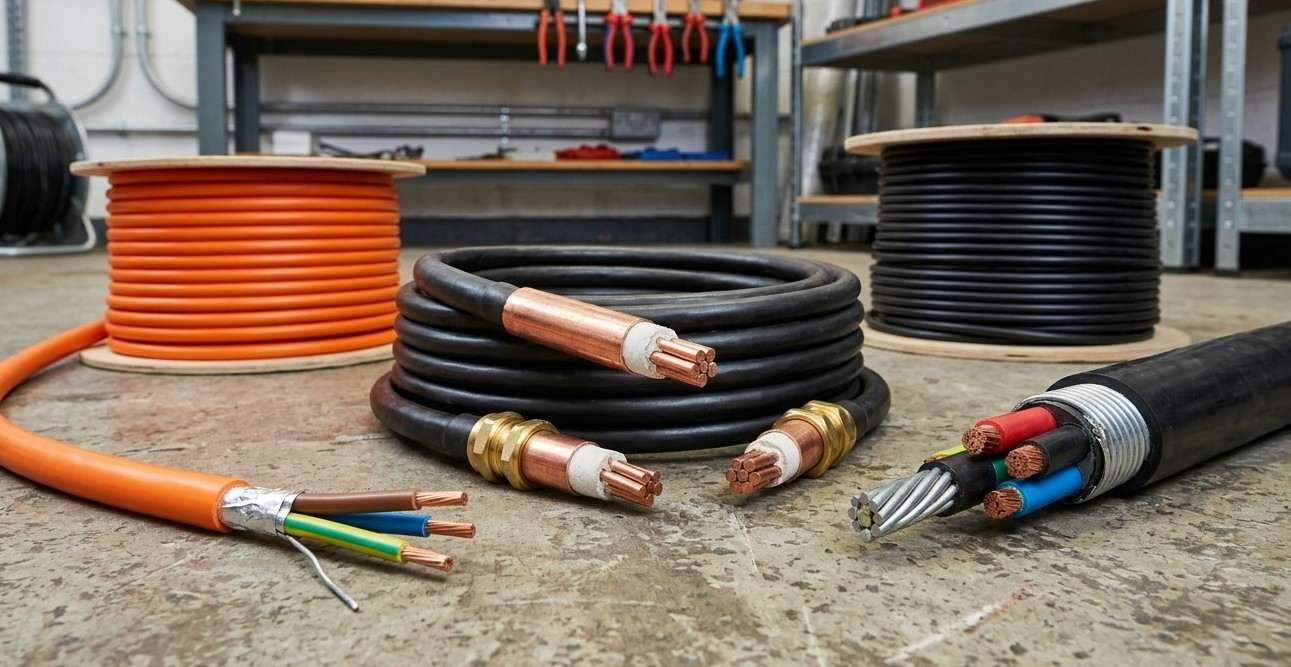
Fire resistant cable keeps powering emergency circuits while a fire burns. The main types are mineral insulated copper cable, mica-taped polymer cable, and ceramifying silicone cable. Match the rating to the circuit: IEC 60331 or BS 6387 for survival time, IEC 60332 for flame spread, and IEC 61034 for smoke.
What Is a Fire Resistant Cable?
Fire-resistant cables are specialized electrical wires engineered to maintain circuit integrity and keep critical safety systems operating during a fire. They continue carrying current for a rated time under direct flame. Alarms, smoke extraction, emergency lighting, and fire pumps depend on this survival capability.
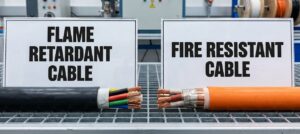
They differ from flame retardant cable, which only slows flame spread and fails once the insulation breaks down. A cable can pass a flame spread test and still short-circuit within minutes of direct heat. Specifiers who confuse the two leave life-safety circuits unprotected.
What Are the Main Fire Resistant Wire & Cable Types?
The three main types of fire resistant wire & cables are mineral insulated copper cable, mica-taped polymer cable, and ceramifying silicone cable. Each uses a different insulation barrier to survive heat, so cost, flexibility, and installation effort vary across building types.
Mineral Insulated Cable
Mineral insulated cable packs magnesium oxide around solid copper conductors inside a metal sheath. The insulation is inorganic, so it produces no smoke and withstands temperatures near copper’s melting point of 1,083°C.
It is rigid and needs specialist terminations. It suits plant rooms, risers, and high-risk zones.
Mica-Tape Polymer Cable
Mica tape wraps the conductor and forms a ceramic-like barrier as the outer polymer burns away. These fire-resistant power cables typically use XLPE insulation with an LSZH sheath.
They bend and install like standard cable. That makes them the default choice for most commercial building circuits.
Ceramifying Silicone Cable
Silicone insulation converts into a hard ceramic shell under flame, holding conductors apart. It is light and fast to install.
The ceramic residue is brittle, so the route needs protection from impact and hose-stream force after ignition.
Is a Heat Resistant Cable the Same as a Fire Resistant Cable?
No. A heat resistant cable tolerates high continuous operating temperatures, often 150°C to 250°C, in ovens, boilers, and furnace areas. A fire resistant cable survives direct flame for a rated duration. Heat resistance describes everyday thermal endurance, while fire resistance describes emergency survival.
This gap causes real specification errors. A silicone-insulated heat resistant cable may handle a hot plant room for years and still lack any circuit integrity certification. Always confirm the test standard on the datasheet, not just the temperature rating.
How Are Fire Resistant Cable Ratings Defined?
Fire resistant cable ratings are defined by standardized tests that measure circuit survival, flame spread, smoke density, and toxicity. Survival standards such as IEC 60331 and BS 6387 apply direct flame at set temperatures for fixed durations while the cable stays energized. Related standards cover secondary hazards that often injure occupants more than flame.
- IEC 60331: circuit integrity under flame, typically at 750°C or higher. Durations vary by test part.
- BS 6387: categories C (950°C flame), W (water spray), and Z (mechanical shock). A CWZ rating covers all three.
- IEC 60332-3: vertical flame spread for bunched cables.
- IEC 61034 and IEC 60754: smoke density and halogen acid gas emission.
- UL 2196: two-hour circuit integrity rating for North American systems.
How Do You Select the Right Cable?
Select cable by matching four factors to each circuit: required survival duration, mechanical and water exposure, smoke and toxicity limits, and installation constraints. Start from the applicable building code and the fire strategy, then verify the full system, not just the cable.
Use this four-point survival check for every emergency circuit:
- Duration: confirm the minutes required by code. Fire pumps and smoke control usually demand the longest.
- Exposure: assume falling debris and sprinkler water. Specify BS 6387 CWZ or an equivalent combined test.
- Emissions: require an LSZH sheath tested to IEC 61034 and IEC 60754 in tunnels, hospitals, and data centers.
- Installability: check bend radius, termination skill, weight, and lifecycle cost.
What Installation Errors Defeat Fire Resistant Cable?
Most fire resistant cable failures in real fires trace back to installation, not the cable itself. Plastic cable ties, unrated clips, and non-metallic fixings melt early, letting the cable sag, short circuit, or drop under its own weight.
Edge cases deserve attention too. Penetrations through fire-rated walls need compatible sealing systems. Mixed-rating routes create weak links, so one 30-minute section can invalidate a 120-minute design.
Test circuits after installation with insulation resistance checks. Document the results for the authority having jurisdiction.
How Do You Choose a Fire Resistant Cable Supplier in UAE?
Choose a supplier in UAE that provides third-party test certificates, batch traceability, and compliance with local Civil Defence requirements. Verify that each cable carries the exact IEC or BS rating your fire strategy specifies, and that accessories such as glands and fixings are rated to match.
Ask for datasheets showing the test standard, flame temperature, and duration. Check delivery lead times against your project schedule, since late substitutions often introduce unrated products.
Choosing Fire Resistant Cables for Life-Safety Circuits
Circuit survival depends on matching type, rating, and installation to the job each cable performs. Start with duration, add exposure and smoke requirements, then verify supports, glands, and terminations.
Get the Right Fire Resistant Cable for Your Life-Safety Circuits
Need fire resistant cables that arrive certified and ready for your project? Aswan Electric, a supplier in UAE, can help you select suitable fire-resistant power cables based on your circuit duration, exposure conditions, and smoke requirements.
Request a Cable QuoteFAQ
What is the difference between fire resistant and flame retardant cable?
Fire resistant types keep circuits working during a fire for a rated time. Flame retardant cable only resists flame spread and can fail quickly under direct heat. Life-safety circuits need circuit integrity, not just flame retardance.
How long should a cable survive in a fire?
Duration depends on local code and circuit function. Requirements commonly range from 30 to 120 minutes. Fire pumps and smoke control systems often need the longest, and BS 6387 tests extend to three hours.
Is LSZH cable the same as fire resistant cable?
No. LSZH describes low smoke, halogen-free emissions, while fire resistance describes circuit survival. Many fire resistant cables combine both properties, so confirm each rating separately on the datasheet.
Related Electrical Guides
- The Ultimate Introductory Guide to Electrical Wires and Cables: Covers common wire and cable types and their applications.
- Cable Glands: Types, Sizes and Installation Guide: Explains cable gland types, sizing, and installation methods.
- Metal Enclosures: Materials, Properties and Selection Guide: Explores enclosure materials, properties, and selection factors.
- What Is a Variable Frequency Drive? Complete Guide: learn how a VFD controls motor speed and torque, and where it fits in your plant.
- What Is a Heavy Duty Connector (HDC)? A Complete Guide: everything you need to know before you specify one.